Críticas
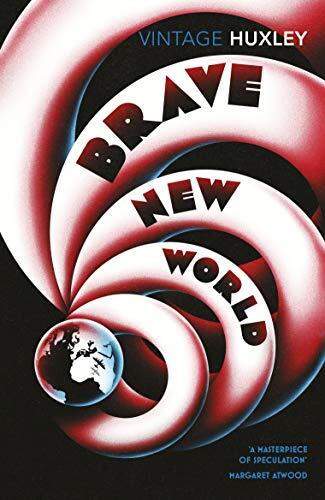
Huxley's nightmare, set out in Brave New World, his great dystopian novel, was that we would be undone by the things that delight us ― Guardian
The most prophetic book of the 20th century... If you have time for just one book, this would be my top choice.
A brilliant tour de force, Brave New World may be read as a grave warning of the pitfalls that await uncontrolled scientific advance. Full of barbed wit and malice-spiked frankness. Provoking, stimulating, shocking and dazzling ― Observer
Such ingenious wit, derisive logic and swiftness of expression, Huxley's resources of sardonic invention have never been more brilliantly displayed ― The Times
Aldous Huxley was uncannily prophetic, a more astute guide to the future than any other 20th century novelist ... Nineteen Eighty-Four has never really arrived, but Brave New World is around us everywhere
It is impossible to read Brave New World without being impressed by Huxley's eerie glimpses into the present ― New Statesman
The 20th century could be seen as a race between two versions of man-made hell - the jackbooted state totalitarianism of Orwell's Nineteen Eight-Four, and the hedonistic ersatz paradise of Brave New World, where absolutely everything is a consumer good and human beings are engineered to be happy ― Guardian
What Aldous Huxley presented as fiction with the human hatcheries of BraveNew World has become fact. The consequences are profound and, if we don't get it right, deeply disturbing ― Sunday Times
Not a work for people with tender minds and weak stomachs -- J.B. Priestley
Contraportada
Far in the future, the World Controllers have created the ideal society. Through clever use of genetic engineering, brainwashing and recreational sex and drugs all its members are happy consumers. Bernard Marx seems alone harbouring an ill-defined longing to break free. A visit to one of the few remaining Savage Reservations where the old, imperfect life still continues, may be the cure for his distress...
Huxley's ingenious fantasy of the future sheds a blazing light on the present and is considered to be his most enduring masterpiece.
Biografía del autor
Aldous Huxley was born on 26 July 1894 near Godalming, Surrey. He began writing poetry and short stories in his early 20s, but it was his first novel, Crome Yellow (1921), which established his literary reputation. This was swiftly followed by Antic Hay (1923), Those Barren Leaves (1925) and Point Counter Point (1928) – bright, brilliant satires in which Huxley wittily but ruthlessly passed judgement on the shortcomings of contemporary society. For most of the 1920s Huxley lived in Italy and an account of his experiences there can be found in Along the Road (1925). The great novels of ideas, including his most famous work Brave New World (published in 1932, this warned against the dehumanising aspects of scientific and material 'progress') and the pacifist novel Eyeless in Gaza (1936) were accompanied by a series of wise and brilliant essays, collected in volume form under titles such as Music at Night (1931) and Ends and Means (1937). In 1937, at the height of his fame, Huxley left Europe to live in California, working for a time as a screenwriter in Hollywood. As the West braced itself for war, Huxley came increasingly to believe that the key to solving the world's problems lay in changing the individual through mystical enlightenment. The exploration of the inner life through mysticism and hallucinogenic drugs was to dominate his work for the rest of his life. His beliefs found expression in both fiction (Time Must Have a Stop,1944, and Island, 1962) and non-fiction (The Perennial Philosophy, 1945; Grey Eminence, 1941; and the account of his first mescaline experience, The Doors of Perception, 1954). Huxley died in California on 22 November 1963.

Añadir una reseña
Su e-mail no será publicado. Los campos obligatorios estan señalados
Su puntuación *
Necesita Acceder a su cuenta o Registrarse